UX DESIGNER / UX, UI, & MAKING / Sep 2018 - January 2019
Overview
During an internship at the Digital Society School in Amsterdam, I worked within a team of designers and programmers for an organization that helps former prisoners to successfully re-enter society. Exodus came to us with a desire to use data about their participants to help them reintegrate into society. Through a 20 week project I conducted research, and based on that research, developed a 3 part prototype for Exodus participants named RefleXion. The 3 parts consist of a wearable, a mobile application, and an ambient visualization.
ROLE UX Designer
METHODS Paper prototyping, Co-creation, User testing, SCRUM
TOOLS Adobe XD, Illustrator, Arduino
TIMELINE Sep 2018 - Jan 2019
Key Features of Application
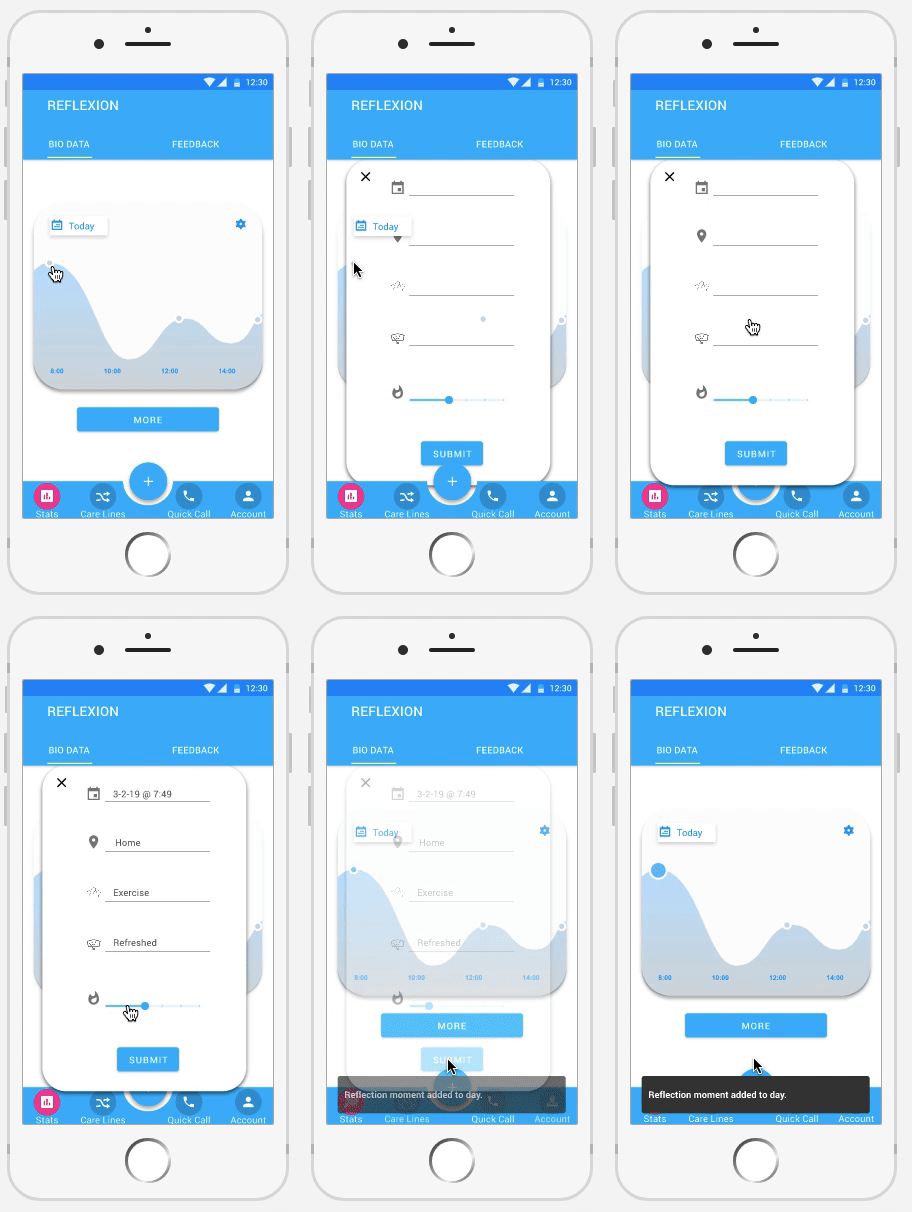
Significant Moment Logging
Issue: Participants have an underdeveloped ability to understand and reflect on their emotions. Being able to log significant moments within the application allows a participant to instantly recognize and provide detailed information on emotionally significant moments within their day. By logging these moments and providing context to them, a participant creates a repository of emotionally charged moments that can later be reflected on with their caretaker.
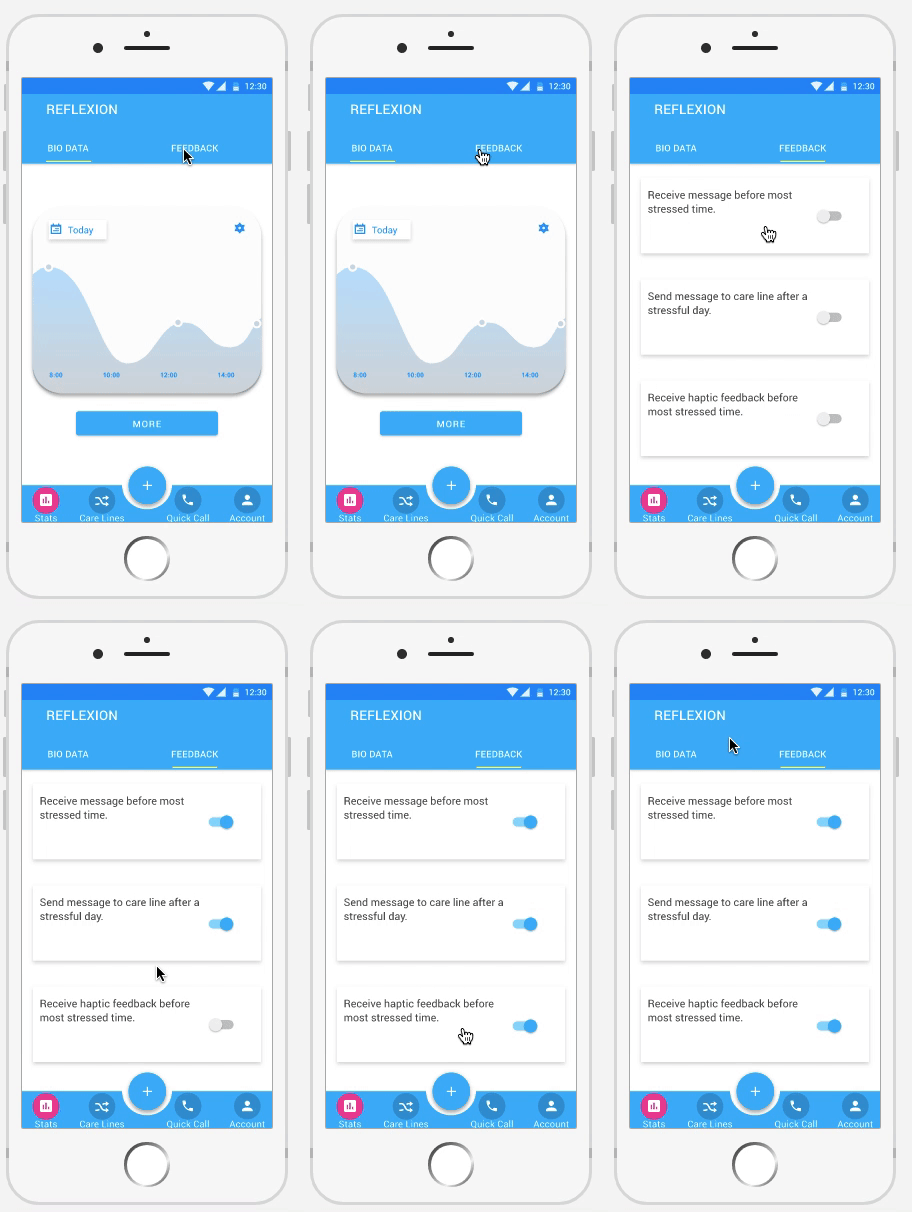
Detailed Feedback Options
Issue: One of the most important ways to help participants is by giving actionable advice. Participants can often get frustrated by vague information or information they cannot act on. Knowing this, I made sure that the application allowed for different types of direct feedback as well as provided important information about excitement/stress rather than just vague or broad data. Within the digital prototype, I created a “Feedback” tab where users can determine what kind of feedback the application will give them.
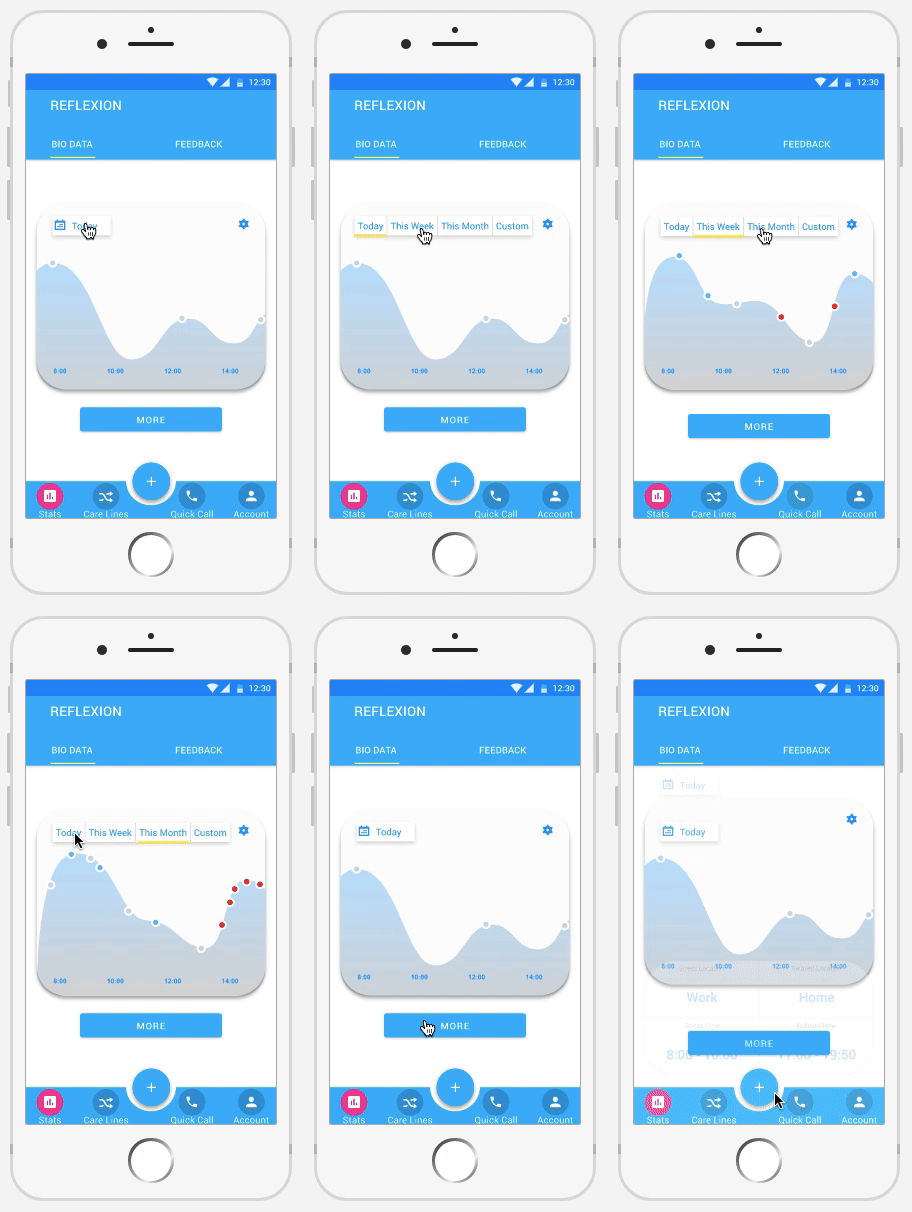
Engaging Motion
Issue: Users need to be motivated to use the application. Through user testing, I learned that the Exodus participants really enjoy an application that moves and responds to their actions. One user even told me that he would be much more likely to use the app if it was “fun”. Armed with this insight, I implemented as much motion within the application as would be possible without making things confusing.
Project Framework
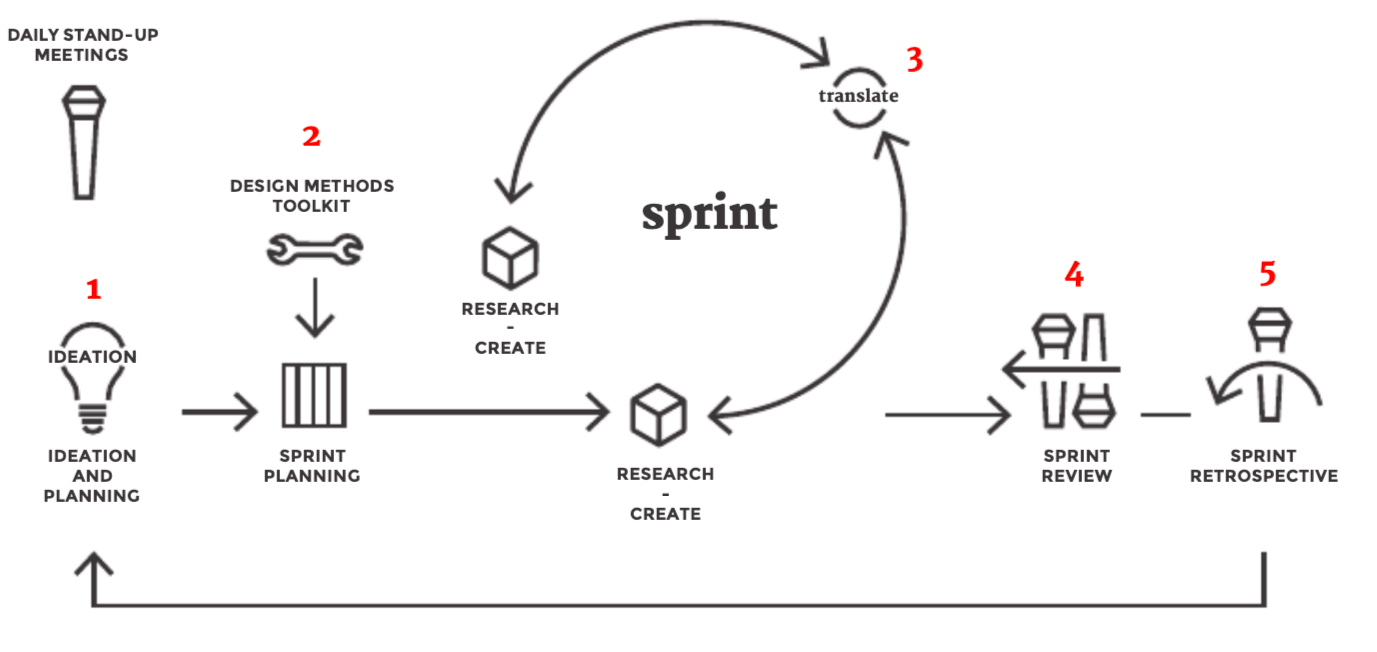
I followed the SCREAM! approach throughout this project. SCREAM is a variant of SCRUM which has an added emphasis on multidisciplinary teams and building teams cohesion through activities. Beyond this, though, it is essentially the same as SCRUM. Letting user research be my guide, I brainstormed and designed multiple solutions. I then tested these ideas via usability tests and developed a high-fidelity interactive prototype based on the findings of user testing.
CHALLENGE
34.895
people imprisoned yearly in the Netherlands
44%
return to prison within 2 years of release
When leaving prison, people receive assistance in many ways: housing, employment, and essentials but not in one crucial area: processing their emotions! This is one serious factor that can cause recidivism. How can we reduce recidivism by helping participants process their emotions ?
Understand the users
In order to help people who are leaving prison better understand their emotions, I had to conduct user research to understand the needs and goals of my users. I conducted user interviews with participants and caretakers, created a literature review of recidivism in the Netherlands, and conducted a 'day in the life' observation of one user. I learned a lot about the daily life of people who have recently left prison. I synthesized this research into specific insights that helped guide my design.
1 No external support
Participants in the Exodus program require external support and accountability because many of them do not have the existing support structures that the average person takes for granted.
2 Emotionally unaware
A significant number of participants have an underdeveloped ability to understand and reflect on their emotions when compared to a person that is not within the program.
3 Feedback incentives
Our users prefer actionable advice and interaction that can help them in their daily life. This includes notifications, haptic feedback, and personal connections.
4 Careline system
Caretakers and participants alike stated that the caretaker/participant relationship was extremely helpful. According to one participant, “I have someone who cares about me and someone I have to be accountable to..."
How might we use participant data to inform them of their emotional state so that they may better manage their journey back into 'normal life'?
Ideating concepts
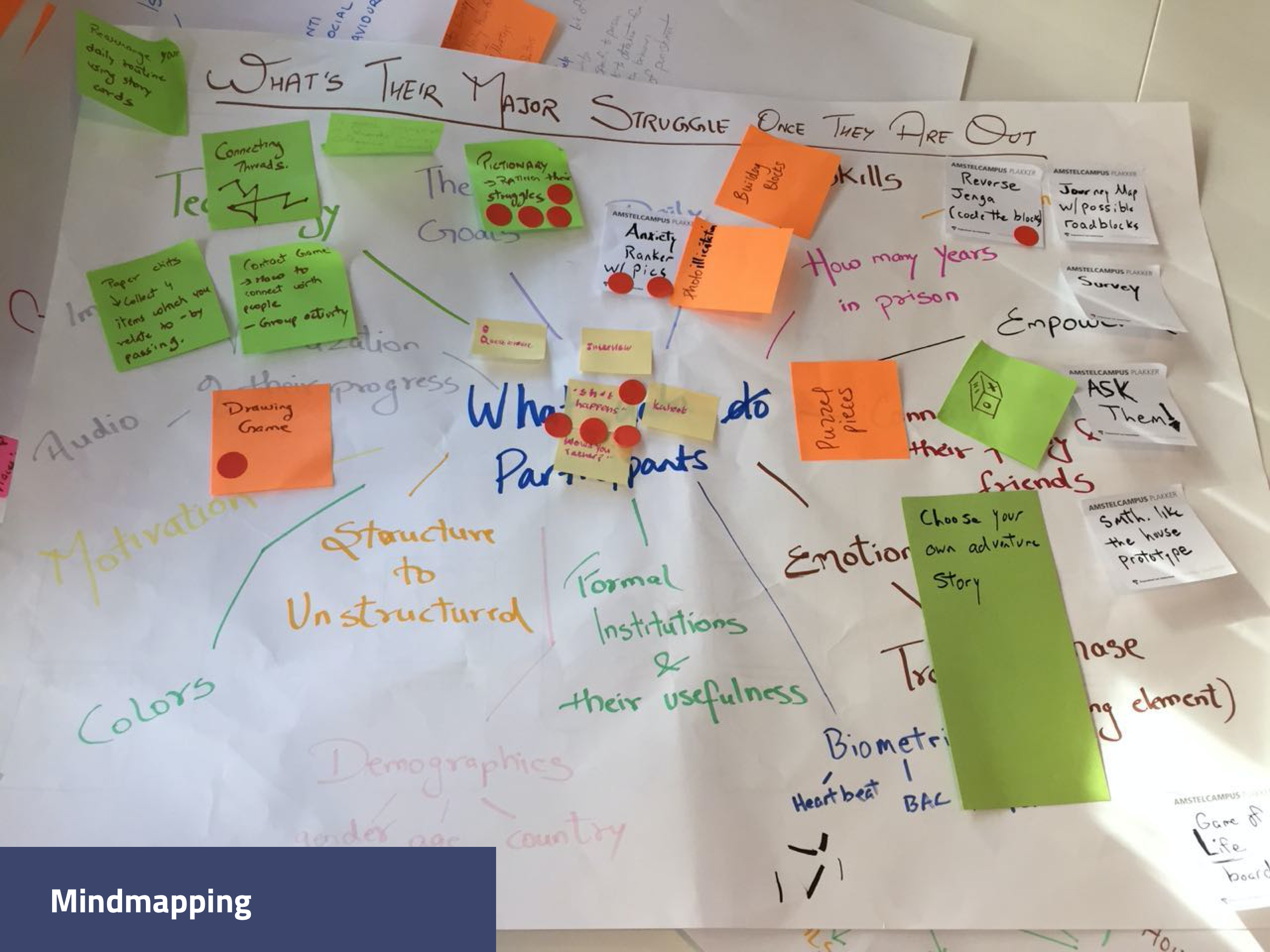
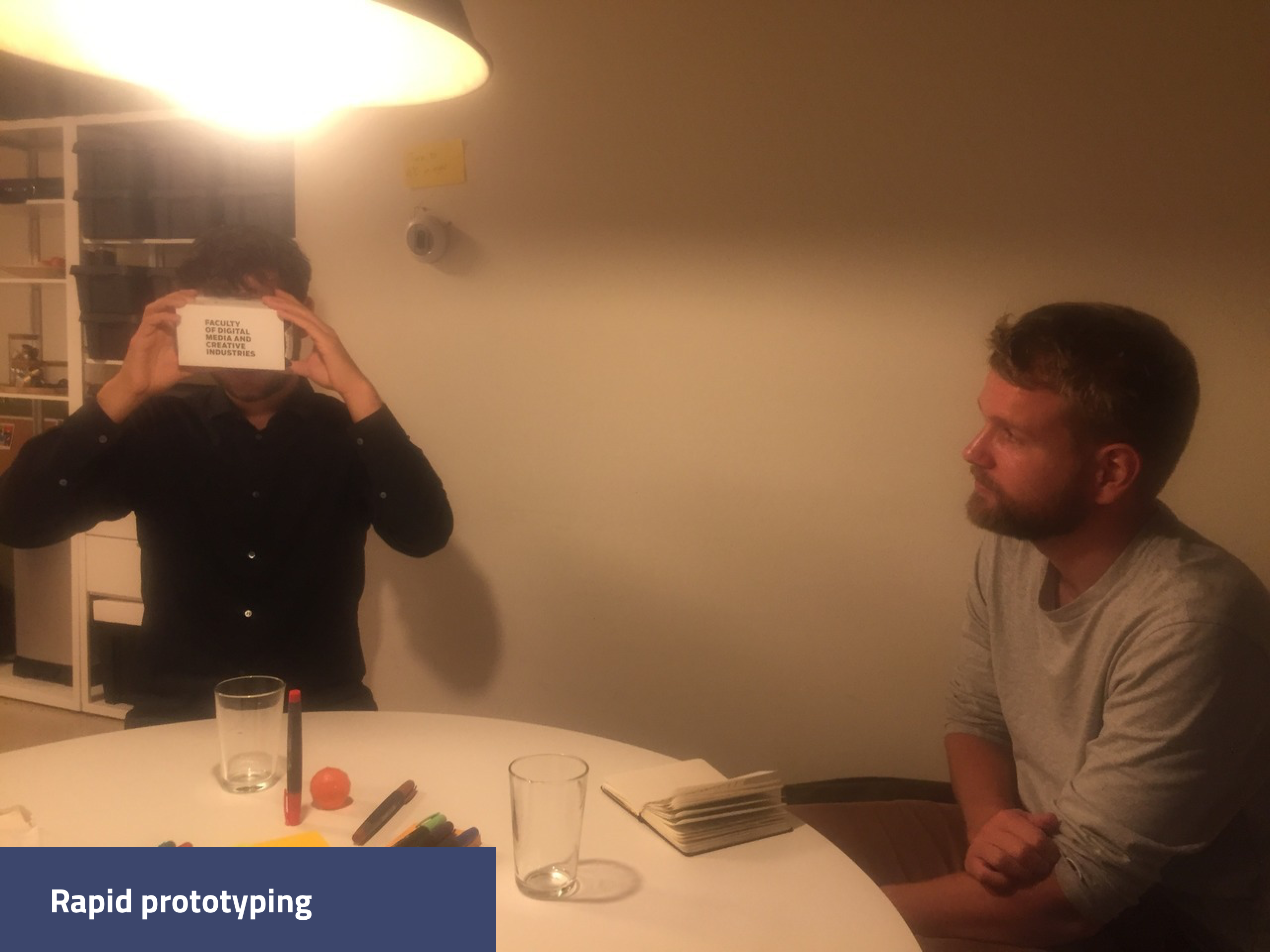
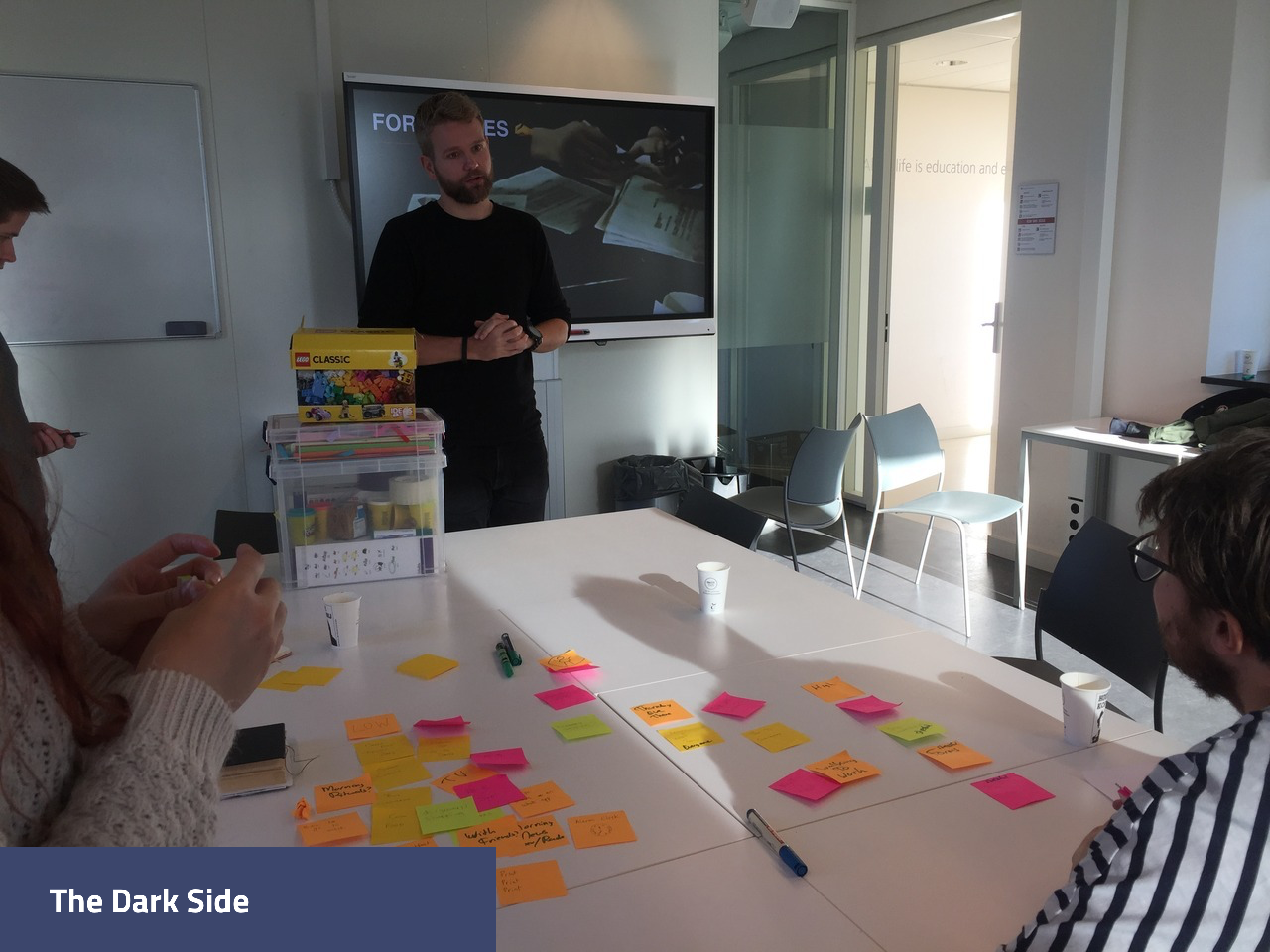
To solve our design challenge, we had a few ideation sessions in which we involved stakeholders from Exodus to think along with us. This was done to give the client a stronger sense of ownership of the project, something that was lacking in previous phases of the project. Some of the methods we conducted were: Mindmapping, The Dark Side, and Rapid prototyping.
Solution: Reflexion
Wearable
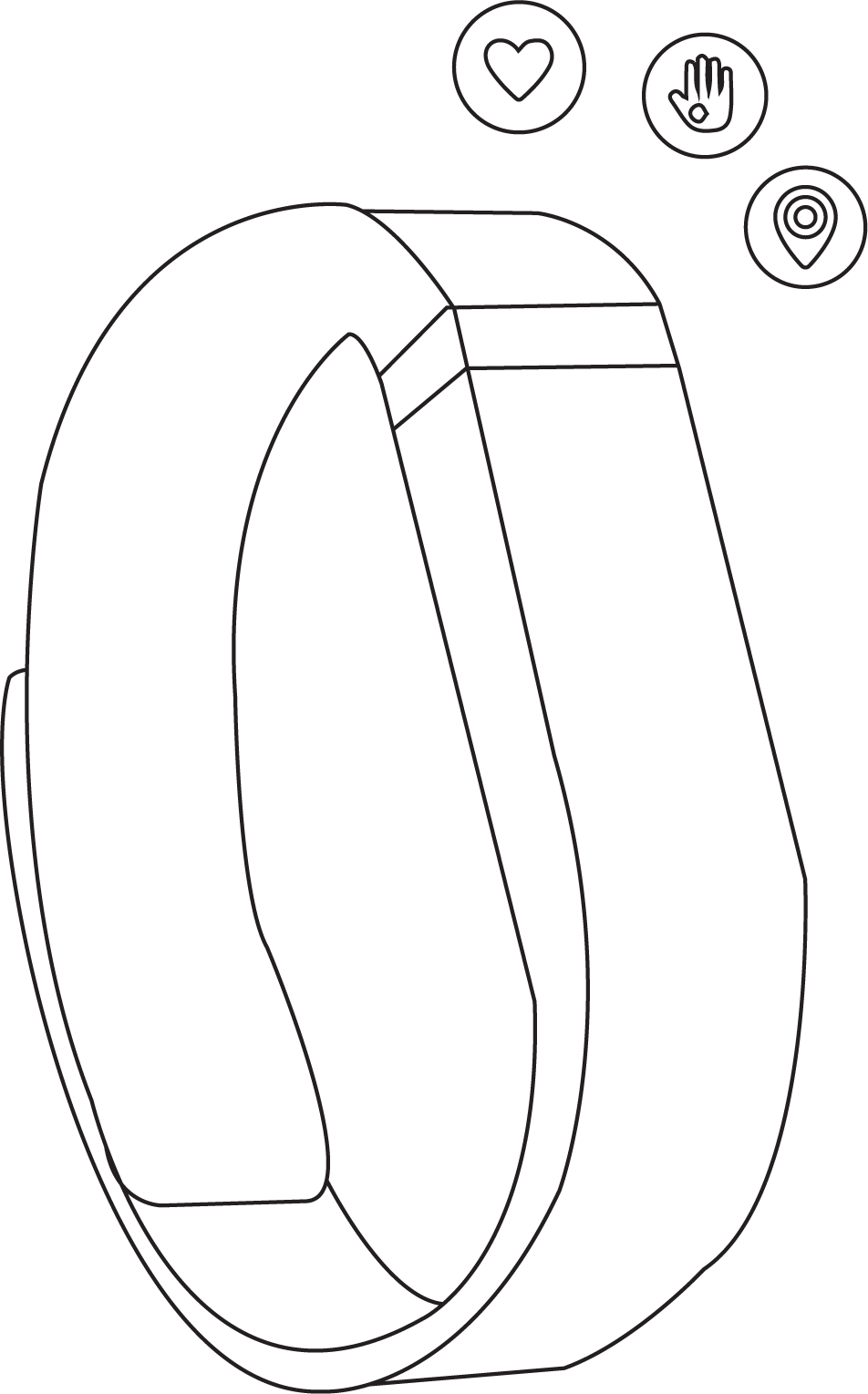
Worn on the wrist and measures excitement and stress Our wearable is equipped with a GSR(Galvanic Skin Response) sensor alongside a heart beat sensor, combining these two can give a good indication of stress and excitement.
Application
An application that enables emotion logging, careline tracking, and detailed insights into data tracked by wearable. Our application provides users with a graphical representation of their excitement and stress throughout the day. The app allows users to log moments in their day, and see these logged moments as points along a graph. This also helps the system to learn about its users. The app has additional functionality, like the status of care lines, and the ability to change feedback settings.
Ambient Visualization
Provides users with an intuitive snapshot of their day. Our ambient visualization is a tangible representation of the user’s emotions in a day, with the day being separated into four sections. It is also a way to promote conversation and connection between Exodus caretakers and Exodus participants.
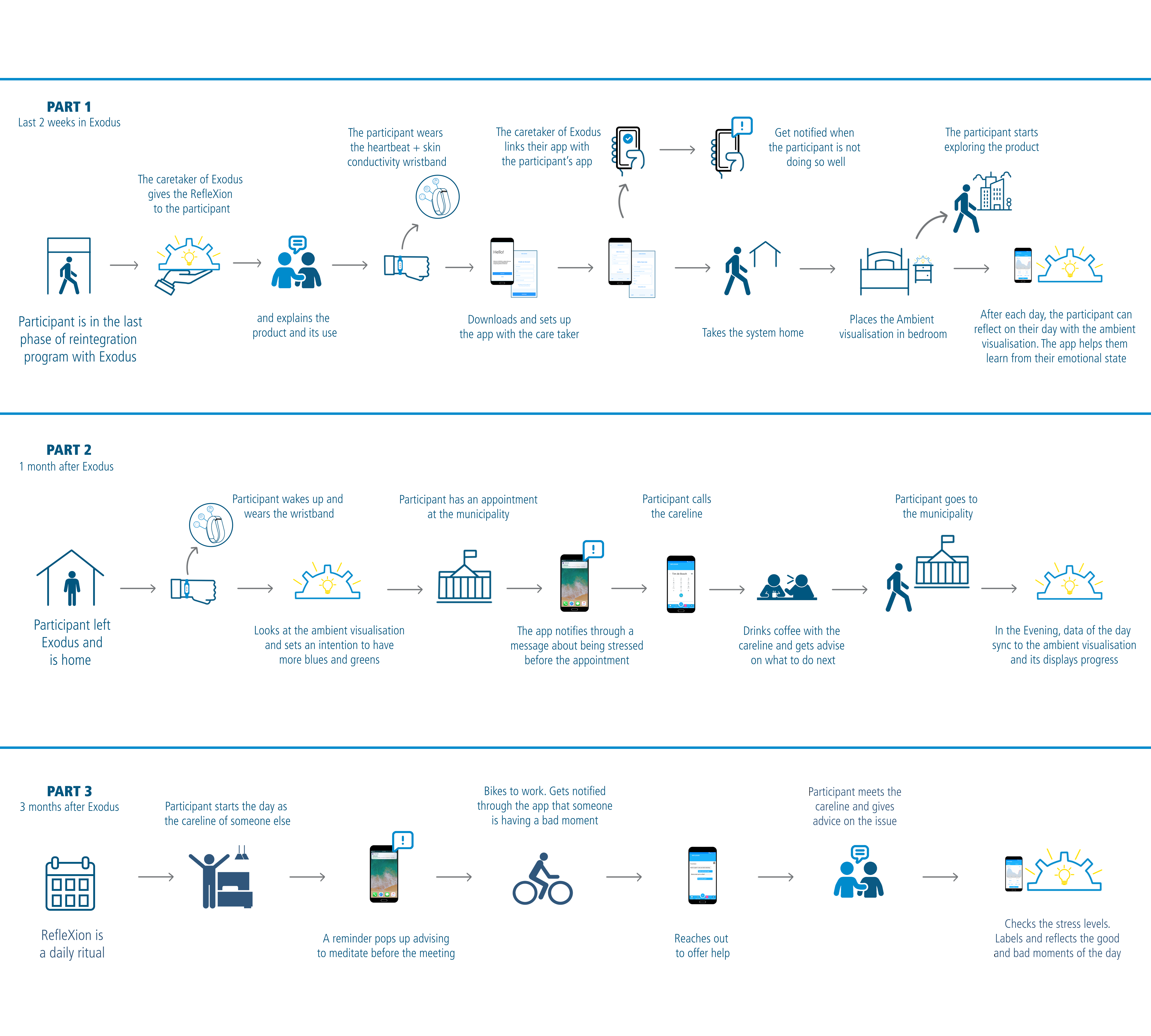
User Journey
Reflection
User testing. If I were to have more time with this project, I would like to conduct some case studies with the prototype. I would ask participants to wear the wearable and use the application, and I would check in with them periodically over the course of six months. At the end of six months, I would ask the participants their impression of the prototype, and ask them if they found it useful. I would also interview caretakers who interact with the participants on a daily basis to see if there was any observable change in their behavior or moodBeyond the qualitative data collected from interviews, having participants wear the prototype for an extended period of time would also provide me with a wealth of data about my users and would open up the possibility of using machine learning down the road. I would also like to spend more time conducting usability tests with the participants to see how effectively they navigate the prototype, and to more finely tune it to their needs and abilities. I was able to conduct a couple usability tests, but there was more I could have learned if I had more time.
UX Immaturity of Organization. Working with a company like Exodus who is not familiar with User Experience Design gave me the opportunity to communicate the importance and reasoning behind conducting user research, and going through an entire design process. At times there was tension between the client and my team, but as the project progressed, I become more effective at explaining my reasoning to the client. Another constraint that I struggled with was coordinating user research sessions. The participants of Exodus are busy people, and have to juggle many different responsibilities throughout the day. This made it difficult to pin down research sessions. However, I overcame this by simply scheduling days in which I and the team would work at an Exodus house, where participants live. This allowed us to strike up organic conversation and collect user research through that.
Other projects
UX / RESEARCH / DASHBOARD DESIGN
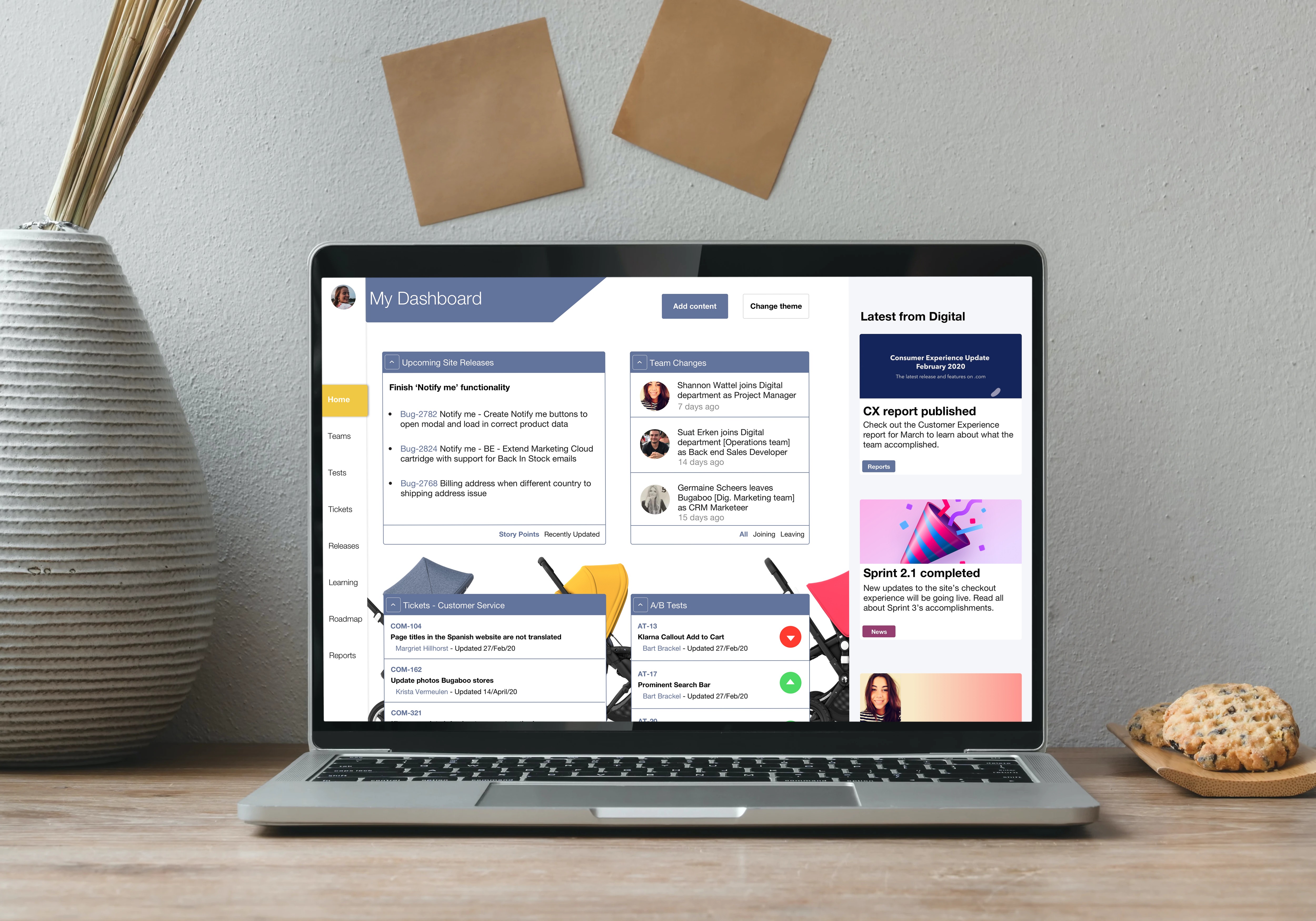
Dashboard to Promote Communication
A dashboard built to increase interdepartmental communication and break down information silos at Bugaboo.